
This blog was originally published in Partnering with Life on Substack
Breathing in, breathing out. Taking in and giving back. This fundamental act of breathing and biological expression is a foundational exchange with Nature.
This dynamic reciprocal exchange operates as participation in a larger field of Life.
Within ancient Andean cosmology, carried across civilizations and generations over thousands of years, this principle is known in Quechua as Ayni and remains alive today through the living Inka wisdom tradition and traditional communities in the Andes.
Its closest translation is sacred reciprocity, yet Ayni reaches far beyond exchange. It speaks to an underlying order of reality and relationship, deeply woven into Life, Earth and Cosmos: giving and receiving. Receiving and giving.
Reciprocity is spoken about widely today, including in fields such as regeneration and living systems thinking. Yet long before scientific frameworks gave it their own language, this understanding was carried by Indigenous traditions across generations and expressed in different ways. Reciprocity is not simply something we know about or do, but something intrinsic to how Life moves.
Not a concept to grasp. A way of living and participating in felt relationship with Life.
Ayni as a way of being and seeing the world
I’ve come to know this truth by walking it: studying, living and practicing the Paqo path of the Andean Mystical tradition.
Driven by a desire to understand more deeply the pre-Columbian and Inka wisdom, mythology and cosmovision of Peru, and to explore my own Peruvian ancestral roots, this journey led me further into Andean Mystical Traditions and Nature Wisdom teachings with several maestros in Peru, before eventually finding my way to Global Paqo School.
Currently, in my third year with the Global Paqo School, I continue studying directly with the Q’ero elders from a living lineage, where ancient Inka Nature Wisdom and the world of living energy are still carried and transmitted orally and through practice.
At the heart of this tradition is learning how to live in harmony with Nature, Pachamama and the sacred forces of Life.
The Q’ero elders remind us that in times of upheaval and climate emergency, we are called to remain in relationship with Nature and to practice Ayni. Through conscious reciprocity with the sacred forces of Life, we participate in creating the conditions for healing, for ourselves and for the wider world.
Years ago, I felt called to go to the source of this lineage I study. This brought me to the remote Q’ero territory in the high Andes of Peru, where I had my first encounters with Ayni on the ancestral lands of a living tradition.
The ascent to the foot of Apu Wamanlipa, at around 4,600 meters, pushed me to my physical and emotional limits.
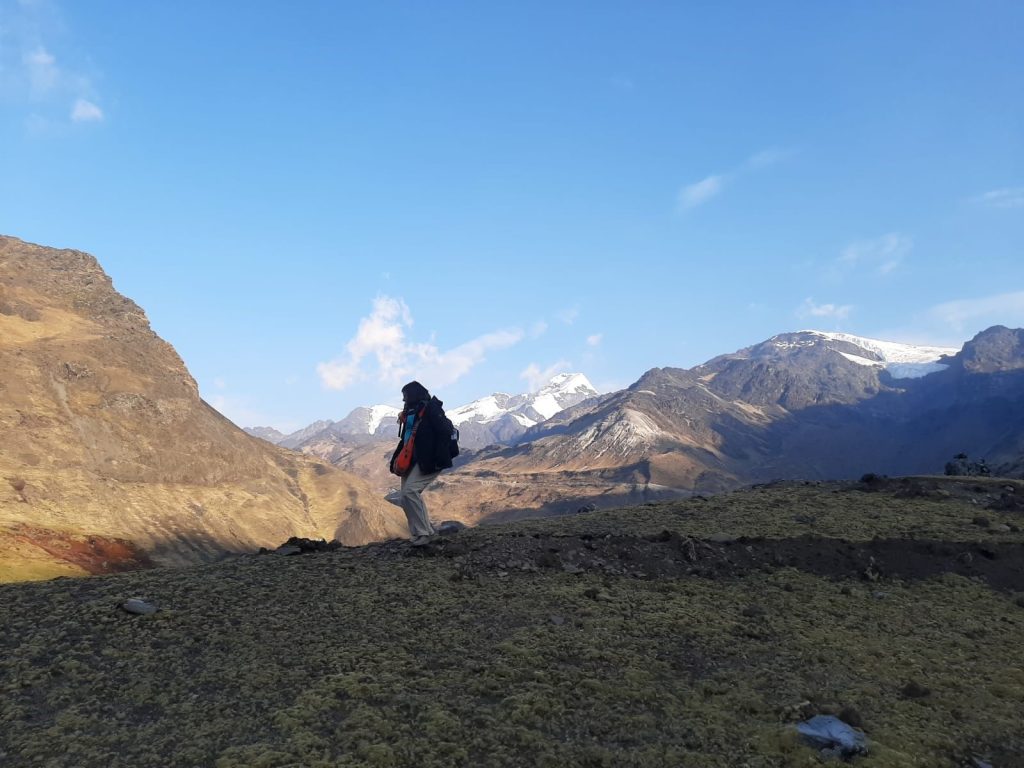
I moved very slowly, pausing every few steps, gasping for breath, and more than once I reached the point of tears, while my son, our small group and don Francisco, our Q’ero Paqo elder, waited patiently ahead.
When I finally reached the ceremonial place, they welcomed me with applause and big smiles. There, beneath the sacred mountain, don Francisco first led a Haywarikuy, an offering of gratitude to Pachamama, the Apus and the living world around us. Only then did we receive a Karpay, an initiation from the Q’ero’s sacred mountain Apu Wamanlipa.
As I learned, when working with Nature, that sequence is always the same and mirrors the circulation of the flow of energy.
First we give.
Then we receive.
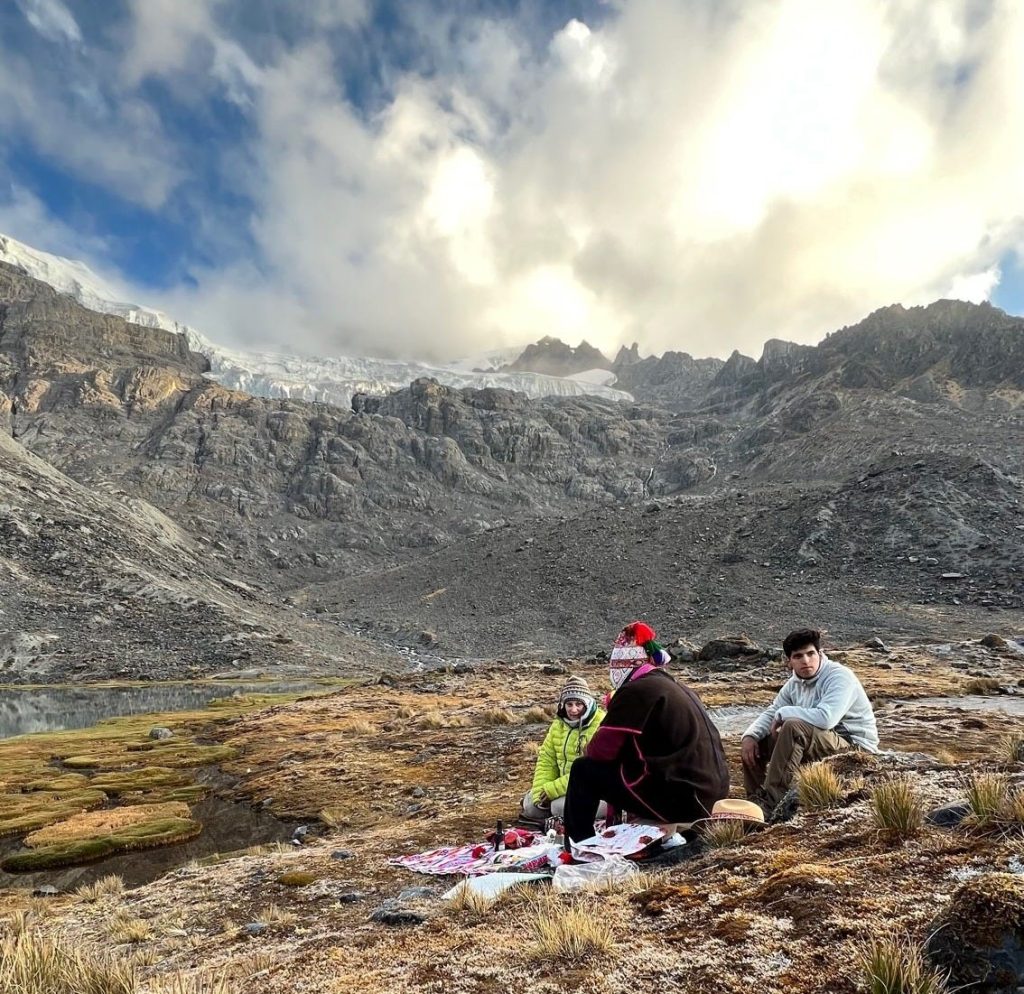
Gratitude, I understood there, is not just a feeling or a word we say. It is an act of joyful giving and comes from the heart. I came to understand viscerally that giving and receiving are one continuous exchange of energy, one pulse of Life itself. Ayni.
Ayni reminds us that Nature is sustained through deep heartfelt relationship, exchange and mutual care, with ourselves, with others, with the Living Earth and with the wider web of Life. A conscious daily act of giving with soul-infused gratitude and love and receiving with generosity.
It matters far beyond being an exchange or a spiritual practice.
A living exchange
Ayni is lived and practiced with the land, mountains, rivers, lakes, stars and unseen currents of existence. Maintaining sacred reciprocity with Nature is essential as it has direct consequences in one’s life.
Healing one’s lineage is an act of restoring Ayni across generations, with our ancestors and with Pachamama, the living dimension of space-time and Cosmos, whose meaning reaches far beyond the common translation of Mother Earth.
One expression of this is the Haywarikuy, a ceremonial offering often referred to as a Despacho. Through heart-infused prayers, breaths, blessings and measured requests, we enter into conscious reciprocity with our seen and unseen relations.
So for me, I translate it simply: if you want love, learn to give love. If you want presence and affection, learn to give presence and affection. What you are willing to give with your consciousness, you keep, through the abundance of energy flowing in your life.
Words do not merely describe this living energy world, they take part in shaping it. Ritual is one key way we consciously rejoin that conversation in a way that is felt, through body, heart and soul, not only through the thinking mind.
From extraction to stewardship
Much of our personal and collective disconnection comes from forgetting that we are always participating in reciprocal exchange.
For those of us shaped by the conventional Western world, practicing reciprocity means shifting from extraction to stewardship and restoration, from a culture of separation to a culture of relationship and participation, and from taking to contributing.
In practice, this could look like tending rather than consuming, involving rather than imposing, relating with curiosity rather than othering.
It also asks something more of us. To notice where we overgive. Where we struggle to receive. Where old identities keep us disconnected from our own needs, truth or belonging.
Where our way of living and leading is still shaped by striving, achieving and proving, rather than by relationship, service and meaningful contribution.
Integrating ancestral wisdom and modern insight in times of rupture
This is part of the work of inner, relational and cultural transformation. In a time marked by fracture and separation, ancestral wisdom and the deeper work of psycho-spiritual development show us ways of relating that modernity has broadly obscured.
Not becoming someone else, but becoming more fully who we are, remembering ourselves as kin with Life, and becoming more conscious of how our participation shapes what we tend, care for and build with others.
As we become, we belong.
When we belong, we care.
What if we learned to see again through the eyes of sacred reciprocity?
What might we choose differently, in our lives, our leadership and the worlds we are shaping together?
